There are many things going on that are changing the face of banking. You’ve heard all the news reports…bank failures of corporate giants no one ever thought would, or could fail, down to local community banks.There are 3 things you need to be aware of now to safeguard your cash. This bank ratings report covers all three.“Protect your cash like a junkyard dog,” is a recommendation from a leading economist who accurately predicted the crash of the markets, the failures of banks, the wiping out of pensions and retirement funds.You owe it to yourself to protect your cash that is in any bank. One way to stay on top of a possible failure of your bank(s) is to know their rating. This is a rating system that the banks and the government do not want you to be aware of, but financially savvy individuals have known about this rating report system for years.Ask your bank personnel what their “BankRating” is and they will more than likely tell you that they don’t have that information. But you can get it without even asking your bank.The rating systems used by different websites are as easy to understand as a student’s report card. A = Excellent5 Stars = SuperiorB = Good4 Stars = SoundC = Fair3 Stars = PerformingD = Weak2 Stars = Below Peer GroupE = Very Weak1 Star = Lowest RatedOn sites that use a letter rating, a plus sign means the rating is in the upper third of the range for each grade; and the minus sign means it is in the lower third. So, a C+ is better than a C or C-.How to find out and monitor the rating of your bank:You can simply do a search on the internet for “Bank Ratings” and find several companies that have a webpage containing a search function for banks, credit unions and thrifts.Here is just one example:Go to http://www.bankrate.com/rates/In the search window, type in yourbank, and click the search button.To search for highly rated banks,leave the bank name blank anduse the dropdown menu for“star rating.” You can search by Asset size as well.(Rating report illustration date 4-10-2015)► To the right of each bank name, you will see its rating. If your bank is rated 2 Stars or lower, you may want to consider avoiding the risk and inconvenience of a possible future failure by switching to another institution.►To find higher rated banks for your general banking needs, leave out the bank name, and in the “Choose Star Rating” cell use the drop down arrow to select your option. Example: In the “Choose Star Rating” cell use the dropdown menu and select “4 Stars or More,” and click the search button. You will get a list od any banks with a 4 star rating or better.►Check bank’s ratings frequently in this current economic climate.BONUS TIP: While you’re searching, why not check out your insurance companiess too and find out if they are at risk? Just do a search on “insurance company ratings” to find websites where you can check on life, health, property & casualty and HMO insurers while you are on the web. Yes, if an insurance company fails, the states usually pick up the insurance, but what if your state is at risk of going under like some are today? Forewarned is forearmed!There are several ratings website options so you may want to use more than one to see if their ratings are similar for your insurance company.The first question you’ll no doubt be asking is, “How safe is my money?”One prudent money management principle is to not have over $250,000 in any one bank. If you have over $250,000 in a bank account(s) in your name in the same bank, then move some of the funds into another bank immediately to get your cash below that level. Here’s why.The $250,000 FDIC insurance cap was made permanent the Dodd-Frank Wall Street Reform and Consumer Protection Act made the higher amount permanent, according to David Barr, a spokesman for the Federal Deposit Insurance Corp. To Find out if your bank is FDIC Insured click here.HOWEVER, if you have multiple personal accounts in the same name in one bank, generally these are all added together to determine whether the balance exceeds the FDIC insurance limit. If it does, you lose the overage in a bank failure. In an article titled FDIC insures bank deposits to $250,000By Marcie Geffner on Bankrate.com, he states:One way to protect your cash asset is to have a separate account in your spouse’s name, as that is covered by its own FDIC insurance limit. Corporate or business accounts are treated separately from personal accounts. Check with your bank to see how they view your accounts and ask for their policy in writing if you have any doubts.The FDIC has taken over many failing banks since the 2009 crash. As of 2010, there were over 1,500 more banks “at risk” and the number was growing, and is growing again now due to recent loosening of restictions that were placed on banks for activities that caused the bank failures back in 2009. Besides having YOUR money confiscated, the danger is this: they usually plan a bank takeover to begin as soon as the bank closes on Friday night and a huge team of people work all night to try to get the bank open by the next business day.When bank failures become more and more frequent, the planning time and staff needed to accomplish a fast re-opening of the bank may overwhelm the capabilities of the FDIC, and it could take longer than just a day or two for a bank to re-open. Many individuals and small businesses who live from deposit to deposit could suffer because they cannot get to their cash to operate.One safeguard is to buy a safe and keep some cash on hand for emergencies.The two questions that beg to be asked are 1) can the FDIC’s budget for insuring deposits cover all the future losses, and 2) if many more banks fail at once, does the FDIC have the staff to reopen them in hours, or will it take days, perhaps, weeks to reopen them?In 2010, a friend of mine sent me this video of a “60 Minutes” TV report that shows the FDIC actually planning and executing the takeover of a bank with multiple branch locations. Also included is an interview with the head of the FDIC who assures the reporter that the FDIC is backed by the full faith and credit of the U.S. Government.”Somehow, that’s not too reassuring considering the U.S. government has already borrowed trillions from the Federal Reserve to fund the bailout of private companies and pay for the billions worth of pork barrel projects that congress stuffed into the bailout bills. Watch this video so you are informed about exactly how the FDIC takes over a failing bank. Do your research on your banks and decide where you feel your money is the safest.A final word of caution.…if you are invested in the stock/bond market and have moved your money into a money market at your brokerage firm, that money market is NOT usually insured by the FDIC unless it is in a money market fund invested in U.S. Government Treasury Bills. Otherwise it is usually only insured against fraud. Check with your bank and your securities broker/manager and find out for sure whether your Money Market accounts are, in fact, insured by the FDIC. Suggested Reading: Unleash Your Cash Flow Mojo: The Business Owners Guide to Predicting, Planning, and Controlling Your Company’s Cash FlowHere’s to your financial health,The Money Management TeamMoney Management Solutions, Inc. 4001 Santa Barbara Blvd., #358Naples, FL 34104239-331-7055Visit our websites at:http://www.MoneyMgmtSolutions.comhttp://www.CashFlowMojoSoftware.com


 There are many things going on that are changing
the face of banking. You’ve heard all the news
reports…bank failures of corporate giants no one
ever thought would, or could fail, down to local
community banks.
There are 3 things you need to be aware of now to
safeguard your cash. This bank ratings report
covers all three.
“Protect your cash like a junkyard dog,” is a recommendation from a leading economist who accurately
predicted the crash of the markets, the failures of banks, the wiping out of pensions and retirement
funds.
You owe it to yourself to protect your cash that is in any bank. One way to stay on top of a possible
failure of your bank(s) is to know their rating. This is a rating system that the banks and the government
do not want you to be aware of, but financially savvy individuals have known about this rating report
system for years.
Ask your bank personnel what their “BankRating” is and they will more than likely tell you that they don’t
have that information. But you can get it without even asking your bank.
The rating systems used by different websites are as easy to understand as a student’s report card.
A = Excellent
5 Stars = Superior
B = Good
4 Stars = Sound
C = Fair
3 Stars = Performing
D = Weak
2 Stars = Below Peer Group
E = Very Weak
1 Star = Lowest Rated
On sites that use a letter rating, a plus sign means the rating is in the upper third of the range for each
grade; and the minus sign means it is in the lower third. So, a C+ is better than a C or C-.
How to find out and monitor the rating of your bank:
You can simply do a search on the internet for “Bank Ratings” and find several companies that have a
webpage containing a search function for banks, credit unions and thrifts.
Here is just one example:
Go to http://www.bankrate.com/rates/
In the search window, type in your
bank, and click the search button.
To search for highly rated banks,
leave the bank name blank and
use the dropdown menu for
“star rating.” You can search by
Asset size as well.
(Rating report illustration date 4-10-2015)
► To the right of each bank name, you will see its rating. If your bank is rated 2 Stars or
lower, you may want to consider avoiding the risk and inconvenience of a possible
future failure by switching to another institution.
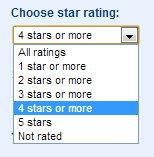
► To find higher rated banks for your general banking needs, leave out the bank name,
and in the “Choose Star Rating” cell use the drop down arrow to select your option.
Example: In the “Choose Star Rating” cell use the
dropdown menu and select “4 Stars or More,” and
click the search button. You will get a list od any
banks with a 4 star rating or better.
► Check bank’s ratings frequently in this current
economic climate.
BONUS TIP: While you’re searching, why not check out your insurance companiess too and find out if
they are at risk? Just do a search on “insurance company ratings” to find websites where you can
check on life, health, property & casualty and HMO insurers while you are on the web. Yes, if an
insurance company fails, the states usually pick up the insurance, but what if your state is at risk of
going under like some are today? Forewarned is forearmed!
There are several ratings website options so you may want to use more than one to see if their ratings
are similar for your insurance company.
The first question you’ll no doubt be asking is, “How safe is my money?”
One prudent money management principle is to not have over $250,000 in any one bank. If you have
over $250,000 in a bank account(s) in your name in the same bank, then move some of the funds into
another bank immediately to get your cash below that level. Here’s why.
The $250,000 FDIC insurance cap was made permanent the Dodd-Frank Wall Street Reform and
Consumer Protection Act made the higher amount permanent, according to David Barr, a spokesman
for the Federal Deposit Insurance Corp. To Find out if your bank is FDIC Insured click here.
HOWEVER, if you have multiple personal accounts in the same name in one bank, generally these are
all added together to determine whether the balance exceeds the FDIC insurance limit. If it does, you
lose the overage in a bank failure. In an article titled FDIC insures bank deposits to $250,000
By Marcie Geffner on Bankrate.com, he states:
One way to protect your cash asset is to have a separate account in your spouse’s name, as that is
covered by its own FDIC insurance limit. Corporate or business accounts are treated separately from
personal accounts. Check with your bank to see how they view your accounts and ask for their policy in
writing if you have any doubts.
The FDIC has taken over many failing banks since the 2009 crash. As of 2010, there were over 1,500
more banks “at risk” and the number was growing, and is growing again now due to recent loosening of
restictions that were placed on banks for activities that caused the bank failures back in 2009. Besides
having YOUR money confiscated, the danger is this: they usually plan a bank takeover to begin as
soon as the bank closes on Friday night and a huge team of people work all night to try to get the bank
open by the next business day.
When bank failures become more and more frequent, the planning time and staff needed to accomplish
a fast re-opening of the bank may overwhelm the capabilities of the FDIC, and it could take longer than
just a day or two for a bank to re-open. Many individuals and small businesses who live from deposit to
deposit could suffer because they cannot get to their cash to operate.
One safeguard is to buy a safe and keep some cash on hand for emergencies.
The two questions that beg to be asked are 1) can the FDIC’s budget for insuring deposits cover all the
future losses, and 2) if many more banks fail at once, does the FDIC have the staff to reopen them in
hours, or will it take days, perhaps, weeks to reopen them?
In 2010, a friend of mine sent me this video of a “60 Minutes” TV report that shows the FDIC actually
planning and executing the takeover of a bank with multiple branch locations. Also included is an
interview with the head of the FDIC who assures the reporter that the FDIC is backed by the full faith
and credit of the U.S. Government.”
Somehow, that’s not too reassuring considering the U.S. government has already borrowed trillions
from the Federal Reserve to fund the bailout of private companies and pay for the billions worth of pork
barrel projects that congress stuffed into the bailout bills.
Watch this video so you are informed about exactly how the FDIC takes over a failing bank. Do your
research on your banks and decide where you feel your money is the safest.
A final word of caution.…if you are invested in the stock/bond market and have moved your
money into a money market at your brokerage firm, that money market is NOT usually insured by the
FDIC unless it is in a money market fund invested in U.S. Government Treasury Bills. Otherwise it is
usually only insured against fraud. Check with your bank and your securities broker/manager and find
out for sure whether your Money Market accounts are, in fact, insured by the FDIC.
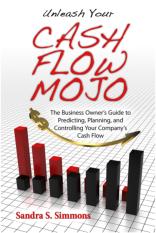
Suggested Reading:
Unleash Your Cash Flow Mojo: The Business Owners Guide to Predicting, Planning, and Controlling Your
Company’s Cash Flow
Here’s to your financial health,
The Money Management Team
Money Management Solutions, Inc.
4001 Santa Barbara Blvd., #358
Naples, FL 34104
239-331-7055
Visit our websites at:
http://www.MoneyMgmtSolutions.com
http://www.CashFlowMojoSoftware.com
There are many things going on that are changing
the face of banking. You’ve heard all the news
reports…bank failures of corporate giants no one
ever thought would, or could fail, down to local
community banks.
There are 3 things you need to be aware of now to
safeguard your cash. This bank ratings report
covers all three.
“Protect your cash like a junkyard dog,” is a recommendation from a leading economist who accurately
predicted the crash of the markets, the failures of banks, the wiping out of pensions and retirement
funds.
You owe it to yourself to protect your cash that is in any bank. One way to stay on top of a possible
failure of your bank(s) is to know their rating. This is a rating system that the banks and the government
do not want you to be aware of, but financially savvy individuals have known about this rating report
system for years.
Ask your bank personnel what their “BankRating” is and they will more than likely tell you that they don’t
have that information. But you can get it without even asking your bank.
The rating systems used by different websites are as easy to understand as a student’s report card.
A = Excellent
5 Stars = Superior
B = Good
4 Stars = Sound
C = Fair
3 Stars = Performing
D = Weak
2 Stars = Below Peer Group
E = Very Weak
1 Star = Lowest Rated
On sites that use a letter rating, a plus sign means the rating is in the upper third of the range for each
grade; and the minus sign means it is in the lower third. So, a C+ is better than a C or C-.
How to find out and monitor the rating of your bank:
You can simply do a search on the internet for “Bank Ratings” and find several companies that have a
webpage containing a search function for banks, credit unions and thrifts.
Here is just one example:
Go to http://www.bankrate.com/rates/
In the search window, type in your
bank, and click the search button.
To search for highly rated banks,
leave the bank name blank and
use the dropdown menu for
“star rating.” You can search by
Asset size as well.
(Rating report illustration date 4-10-2015)
► To the right of each bank name, you will see its rating. If your bank is rated 2 Stars or
lower, you may want to consider avoiding the risk and inconvenience of a possible
future failure by switching to another institution.
► To find higher rated banks for your general banking needs, leave out the bank name,
and in the “Choose Star Rating” cell use the drop down arrow to select your option.
Example: In the “Choose Star Rating” cell use the
dropdown menu and select “4 Stars or More,” and
click the search button. You will get a list od any
banks with a 4 star rating or better.
► Check bank’s ratings frequently in this current
economic climate.
BONUS TIP: While you’re searching, why not check out your insurance companiess too and find out if
they are at risk? Just do a search on “insurance company ratings” to find websites where you can
check on life, health, property & casualty and HMO insurers while you are on the web. Yes, if an
insurance company fails, the states usually pick up the insurance, but what if your state is at risk of
going under like some are today? Forewarned is forearmed!
There are several ratings website options so you may want to use more than one to see if their ratings
are similar for your insurance company.
The first question you’ll no doubt be asking is, “How safe is my money?”
One prudent money management principle is to not have over $250,000 in any one bank. If you have
over $250,000 in a bank account(s) in your name in the same bank, then move some of the funds into
another bank immediately to get your cash below that level. Here’s why.
The $250,000 FDIC insurance cap was made permanent the Dodd-Frank Wall Street Reform and
Consumer Protection Act made the higher amount permanent, according to David Barr, a spokesman
for the Federal Deposit Insurance Corp. To Find out if your bank is FDIC Insured click here.
HOWEVER, if you have multiple personal accounts in the same name in one bank, generally these are
all added together to determine whether the balance exceeds the FDIC insurance limit. If it does, you
lose the overage in a bank failure. In an article titled FDIC insures bank deposits to $250,000
By Marcie Geffner on Bankrate.com, he states:
One way to protect your cash asset is to have a separate account in your spouse’s name, as that is
covered by its own FDIC insurance limit. Corporate or business accounts are treated separately from
personal accounts. Check with your bank to see how they view your accounts and ask for their policy in
writing if you have any doubts.
The FDIC has taken over many failing banks since the 2009 crash. As of 2010, there were over 1,500
more banks “at risk” and the number was growing, and is growing again now due to recent loosening of
restictions that were placed on banks for activities that caused the bank failures back in 2009. Besides
having YOUR money confiscated, the danger is this: they usually plan a bank takeover to begin as
soon as the bank closes on Friday night and a huge team of people work all night to try to get the bank
open by the next business day.
When bank failures become more and more frequent, the planning time and staff needed to accomplish
a fast re-opening of the bank may overwhelm the capabilities of the FDIC, and it could take longer than
just a day or two for a bank to re-open. Many individuals and small businesses who live from deposit to
deposit could suffer because they cannot get to their cash to operate.
One safeguard is to buy a safe and keep some cash on hand for emergencies.
The two questions that beg to be asked are 1) can the FDIC’s budget for insuring deposits cover all the
future losses, and 2) if many more banks fail at once, does the FDIC have the staff to reopen them in
hours, or will it take days, perhaps, weeks to reopen them?
In 2010, a friend of mine sent me this video of a “60 Minutes” TV report that shows the FDIC actually
planning and executing the takeover of a bank with multiple branch locations. Also included is an
interview with the head of the FDIC who assures the reporter that the FDIC is backed by the full faith
and credit of the U.S. Government.”
Somehow, that’s not too reassuring considering the U.S. government has already borrowed trillions
from the Federal Reserve to fund the bailout of private companies and pay for the billions worth of pork
barrel projects that congress stuffed into the bailout bills.
Watch this video so you are informed about exactly how the FDIC takes over a failing bank. Do your
research on your banks and decide where you feel your money is the safest.
A final word of caution.…if you are invested in the stock/bond market and have moved your
money into a money market at your brokerage firm, that money market is NOT usually insured by the
FDIC unless it is in a money market fund invested in U.S. Government Treasury Bills. Otherwise it is
usually only insured against fraud. Check with your bank and your securities broker/manager and find
out for sure whether your Money Market accounts are, in fact, insured by the FDIC.
Suggested Reading:
Unleash Your Cash Flow Mojo: The Business Owners Guide to Predicting, Planning, and Controlling Your
Company’s Cash Flow
Here’s to your financial health,
The Money Management Team
Money Management Solutions, Inc.
4001 Santa Barbara Blvd., #358
Naples, FL 34104
239-331-7055
Visit our websites at:
http://www.MoneyMgmtSolutions.com
http://www.CashFlowMojoSoftware.com